
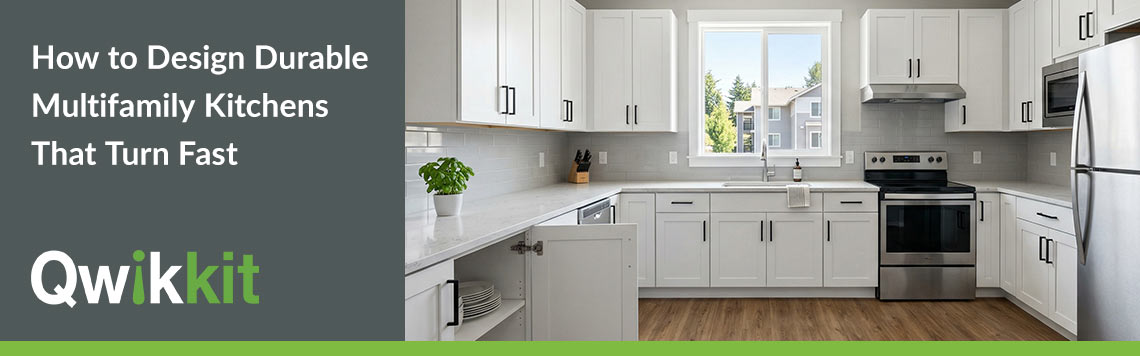
The fastest way to upgrade a multifamily kitchen is to replace what residents notice without touching what is already working. Cabinet refacing swaps out doors, drawer fronts, and hardware while the existing boxes stay in place. No tear-out. No demolition. No need to move plumbing or appliances. Doors arrive prefinished from the factory, ready to hang once the boxes are painted. That means a kitchen that looks new for about a third of the cost of a full gut.
What Makes Cabinet Refacing the Right Choice for Multifamily Kitchens?
For multifamily owners and operators, a kitchen project is a capital call as much as a design call. You need a finish that looks good in photos, holds up to heavy use, and does not burn through your budget. Cabinet refacing hits all three when existing boxes are sound.
Refacing works best on wood boxes in good shape. If boxes are solid but doors are yellowed, dated, or cracked, refacing gives you a near new kitchen without tearing out walls or moving countertops. Skip refacing over metal cabinets or frames with rot or serious damage. For those, full replacement is the right call.
Before you set your budget, audit units by building, floor, and stack. Older properties may have a mix of cabinet ages. Focus your refacing spend where boxes are solid and doors are the problem.
You can also use refacing as a phased plan. Move through a property by stack or by floor. This spreads cost and limits the number of offline units at one time. You control vacancy risk while still raising the look of the property.
The finish is where quality kits stand apart from field painted doors. Prefinished doors arrive ready to hang. The doors need no painting on site. Your crew paints only the existing boxes, using the paint in the kit. No brush marks or uneven color. For operators running turns across many units, that means less painting on site.
To see how multifamily operators use complete refacing kits, visit the Qwikkit multifamily page.

How Do You Plan Multifamily Kitchen Layouts for Fast, Repeatable Turns?
In a busy portfolio, the kitchen is where you feel every slow turn. The goal is not a model unit. The goal is a clean, durable kitchen your team can finish fast and repeat in every unit.
Start with the work triangle. Keep the path from fridge to sink to range short and clear. Avoid layouts where residents must cross behind a hot range to reach the fridge. Refacing keeps the current layout. If a unit needs appliances moved, plan a full replacement for that unit.
A standard spec is the engine of a fast turn system. When your team orders the same door style and pull at every property, they work from a pattern they know. No guesswork on hinge side or pull height. Parts stay stocked. Turns run on time.
Steps to build a repeatable kitchen turn process:
- Audit cabinet condition by building and stack before you order
- Choose one or two door styles that work across all unit types
- Select hardware that ships in stock and replaces easily
- Confirm appliance clearances in your most common floor plans
- Set a standard finish package for cabinets, counters, and paint
- Order complete kits with prefinished doors, drawer fronts, and hardware packed by unit
Finish choices affect both speed and durability. Check each finish under your unit's lighting before you order. Wrapped fronts resist chips when residents move in and out. Light, neutral colors are easy to pair with appliances and flooring.
Color is an operations tool too. A consistent tone across buildings keeps touch ups simple. Pick a color that works with your standard appliance package, flooring, and paint. Soft white or warm gray pairs well with stainless appliances.
Line up your cabinet plan with counters and flooring before you order. A balanced finish package can refresh a unit without a full gut. When you get that result through refacing instead of replacement, you protect capital and cut your project window.
What Cabinet and Hardware Specs Should Multifamily Operators Require?
Clear specs keep your team consistent from unit to unit. Start with doors and drawer fronts. Prefinished, wrapped fronts are a practical choice for rental kitchens. DuraFuse doors have a sealed surface with no exposed edges. Flat or shaker profiles leave fewer grooves for grime to collect between turns.
Cabinet front specs for multifamily:
- Factory prefinished finish, no on-site painting or curing required
- Surface rated for scratch, stain, and water resistance
- One door profile used across the property
- Consistent color code tied to your property standard
Cheap hinges and slides can mean more work orders. Pick one hinge type for every door. Soft Close hinges close quietly and keep doors from slamming. Self Close hinges close on their own too. Both carry a lifetime guarantee from Qwikkit. If drawer slides are worn, replace them during the turn. Refacing kits cover doors, drawer fronts, and hardware. Slides are a separate purchase.
Hardware specs for multifamily:
- Soft close hinges on every cabinet door
- Full extension drawer slides rated for repeated heavy loads
- One bar pull style in two lengths, matching your property finish standard
- Satin Nickel or Matte Black finish, both offered on Qwikkit's Bar Pull
One pull style in two lengths keeps orders simple and lets your team stock a few spares. Skip trendy finishes that may be hard to match in a few years.
Lead time is part of your spec. A supplier that ships complete kits in 5 to 8 business days lets your team plan turns with a firm date. Qwikkit ships complete refacing kits with prefinished doors, drawer fronts, Soft Close or Self Close hinges, pulls, and matching paint. Every carton is labeled with its apartment number. See how the process works on the Qwikkit process page.
Wrap up each project with a written spec guide. Include photos, color codes, and product numbers for every item. Add care notes. When vendors and maintenance staff work from the same guide, you protect your standard and get more life out of every kitchen you update.
